

In an age where urbanization continues to reshape our cities and lifestyles, architects and designers are rediscovering an ancient truth: humans have an innate connection to nature. This realization has given rise to biophilic design, an innovative approach that integrates natural elements into the built environment, creating spaces that nurture both our physical and psychological well-being.
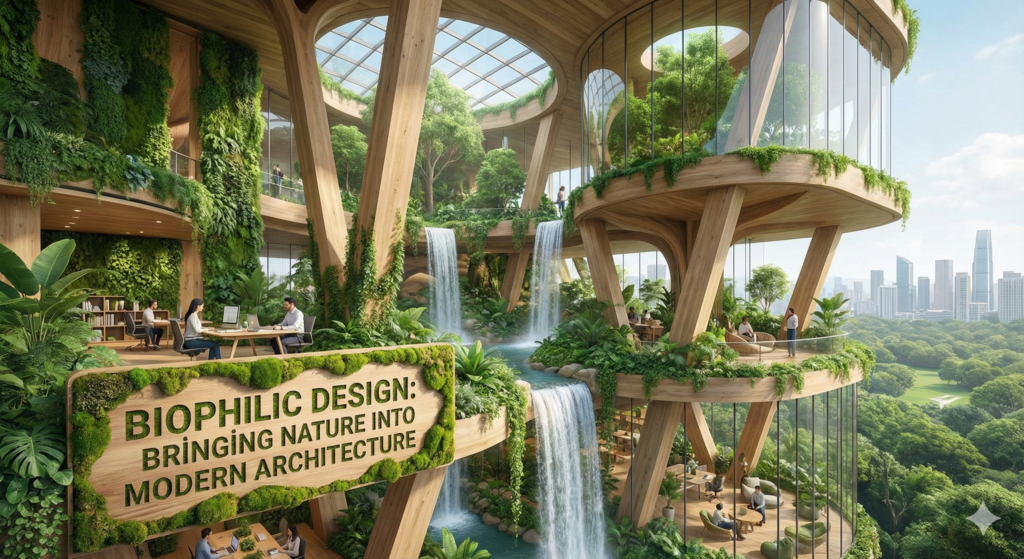
What Is Biophilic Design?
Biophilic design goes beyond simply adding a few potted plants to a room. It’s a comprehensive design philosophy that seeks to connect building occupants more closely to nature through the use of direct nature, indirect nature, and space and place conditions. The term “biophilia” literally means “love of life,” and this design approach recognizes that our connection to the natural world is fundamental to our health and happiness.
Key Elements of Biophilic Architecture
Natural Light and Ventilation
One of the most crucial aspects of biophilic design is maximizing natural light. Large windows, skylights, and glass walls not only reduce energy consumption but also help regulate our circadian rhythms, improving sleep quality and overall mood. Cross-ventilation strategies bring fresh air into spaces, creating a more dynamic and healthy indoor environment.
Living Walls and Green Roofs
Vertical gardens and green roofs have become iconic features of biophilic architecture. These living installations provide insulation, reduce urban heat island effects, improve air quality, and create habitats for urban wildlife. Buildings like the Bosco Verticale in Milan demonstrate how entire facades can be transformed into thriving vertical forests.
Natural Materials
Incorporating wood, stone, bamboo, and other natural materials creates tactile and visual connections to nature. The grain of wood, the texture of stone, and the warmth of natural fibers all contribute to spaces that feel more organic and welcoming. These materials also tend to age beautifully, developing character over time rather than simply deteriorating.
Water Features
The sound and sight of water have profound calming effects. Interior fountains, reflecting pools, and exterior water features add a dynamic element to architecture while also providing acoustic benefits and increasing humidity in dry environments.
The Science Behind Biophilic Design
Research consistently shows that biophilic design delivers measurable benefits. Studies have found that:
- Productivity increases by up to 15% in workspaces with natural elements
- Hospital patients with views of nature recover faster and require less pain medication
- Students in classrooms with natural light and views score higher on standardized tests
- Stress levels decrease significantly in environments with biophilic elements
These findings have made biophilic design increasingly popular in commercial architecture, healthcare facilities, educational institutions, and residential projects.
Implementing Biophilic Design in Your Space
Whether you’re designing a new building or renovating an existing space, there are numerous ways to incorporate biophilic principles:
Start with views. Position windows and work areas to maximize views of natural landscapes, gardens, or water features.
Incorporate organic shapes. Move away from purely rectilinear forms and introduce curves, natural patterns, and fractal geometries that echo forms found in nature.
Create transitional spaces. Design areas that blur the boundary between inside and outside, such as covered terraces, atriums, and courtyards.
Use natural color palettes. Earth tones, greens, blues, and warm neutrals create a more naturalistic atmosphere than stark or artificial colors.
Add sensory variety. Include elements that engage multiple senses—textured surfaces to touch, water features to hear, plants to smell, and natural materials to see.
Case Studies: Biophilic Design in Action
Amazon Spheres, Seattle
Amazon’s headquarters features three glass domes filled with over 40,000 plants from around the world. Employees work in a climate-controlled rainforest environment, with meeting spaces nestled among the foliage. The Spheres demonstrate how workspaces can be completely reimagined as nature-integrated environments.
Jewel Changi Airport, Singapore
This mixed-use development at Singapore’s airport features the world’s tallest indoor waterfall surrounded by a terraced forest valley containing more than 2,000 trees and 100,000 shrubs. The space serves as both a transit hub and a public garden, showing how biophilic design can transform infrastructure.
Parkroyal Collection Pickering, Singapore
This hotel features terraced gardens that contain more than 15,000 square meters of plants—more than double the site’s land area. The cascading gardens, waterfalls, and natural ventilation systems create an urban sanctuary that uses 30% less energy than comparable buildings.
The Future of Biophilic Architecture
As we face the challenges of climate change and increasing urbanization, biophilic design offers a path toward more sustainable and human-centered architecture. Future developments are likely to incorporate:
- Smart greenery systems with automated irrigation and monitoring
- Biointegrated facades that support urban ecosystems
- Restorative environments specifically designed for mental health benefits
- Climate-adaptive designs that work with local ecosystems rather than against them
The next generation of buildings will not just minimize environmental harm—they will actively contribute to ecological health while creating spaces where humans can thrive.
Conclusion
Biophilic design represents more than an aesthetic trend; it’s a fundamental shift in how we think about architecture and our relationship with the built environment. By reconnecting buildings with nature, we create spaces that support human health, enhance productivity, and contribute to environmental sustainability.
As architects and designers continue to explore the possibilities of biophilic design, we’re learning that the most innovative buildings may be those that remember our oldest connection—the one we have with the natural world. In bringing nature back into our cities and structures, we’re not just designing better buildings; we’re creating environments where both people and planet can flourish.
What are your thoughts on biophilic design? Have you experienced spaces that successfully integrate nature? Share your experiences in the comments below.